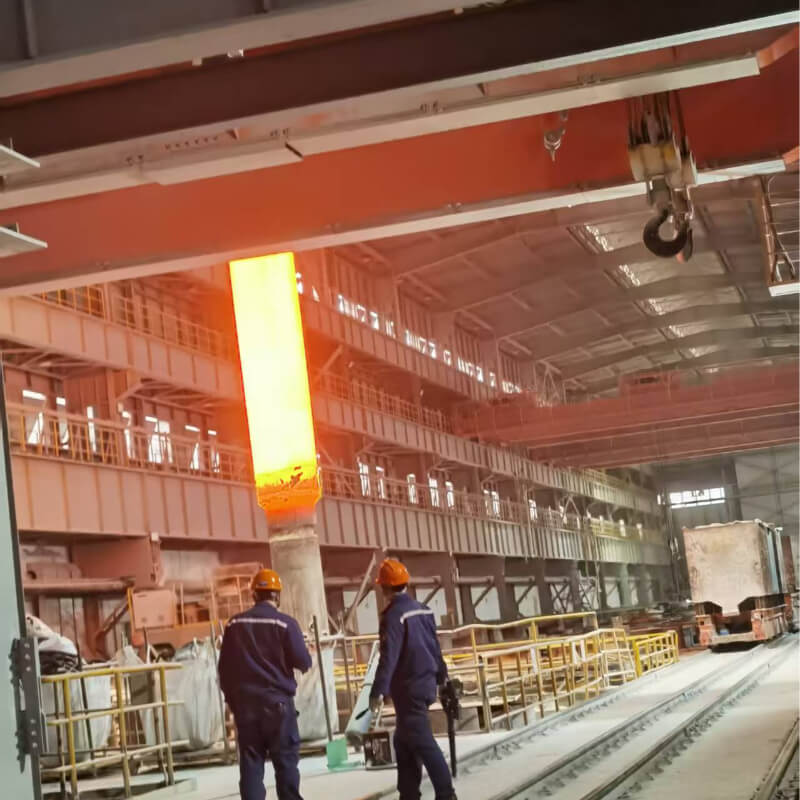
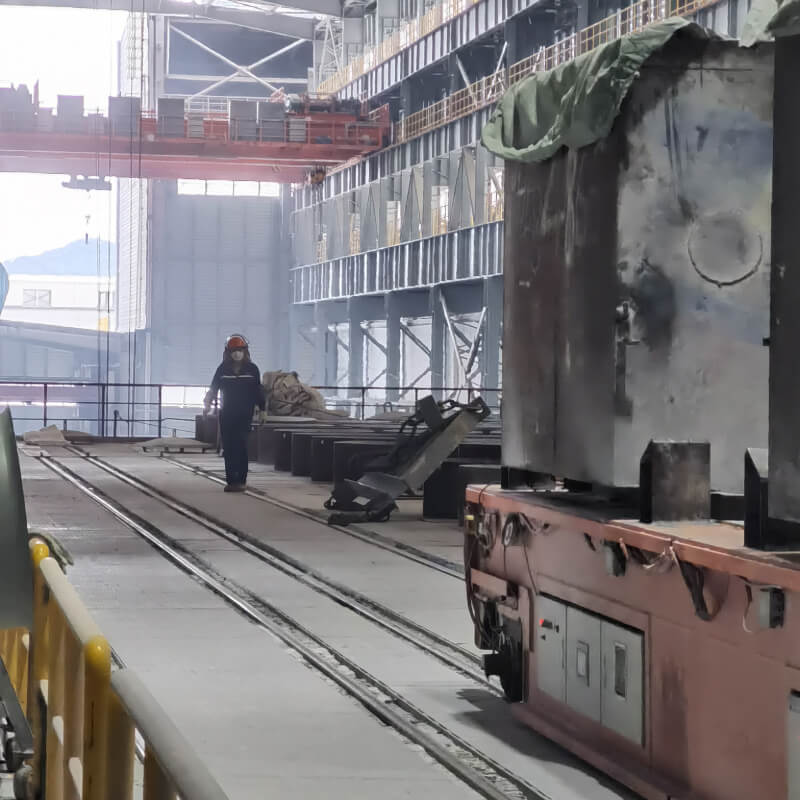
The vehicle used four identical DC Traction Motors, one for each wheel. During operation, however, the customer observed that the front and rear wheels rotated at noticeably different speeds, causing inconsistent vehicle movement and reduced driving stability.
Project Background
The customer's rail transfer cart was designed with a four-wheel-drive configuration using four brushed DC motors powered by a common battery pack.
- 4 identical DC traction motors
- Battery-powered system
- Independent motor drive
- Heavy-duty rail transport application
According to the customer, all motors operated normally when tested individually, yet during vehicle operation the front axle consistently rotated at a different speed from the rear axle.
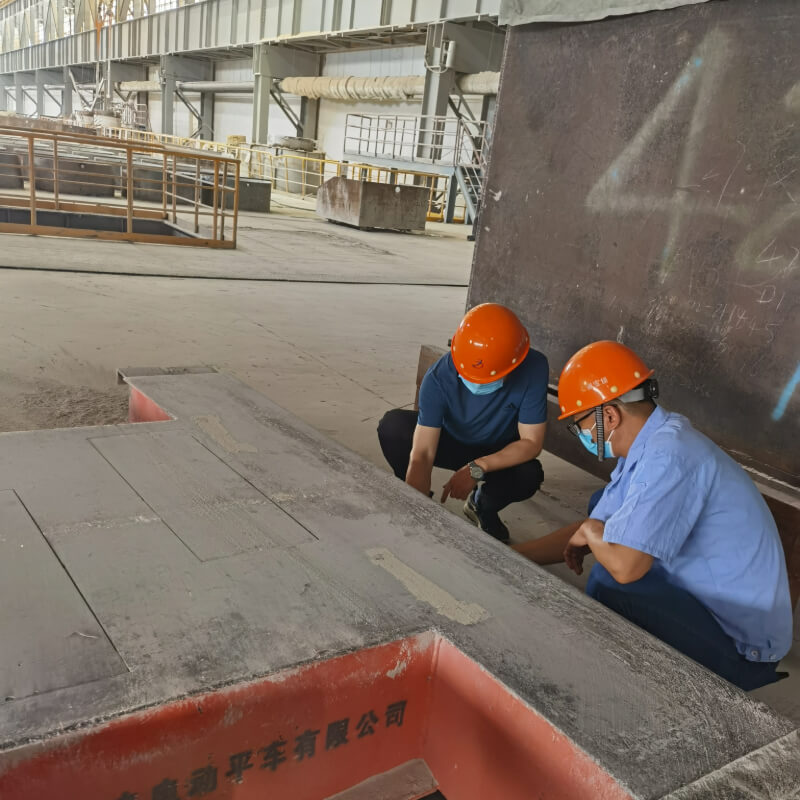
On-Site Investigation
Our engineers first inspected the motors, controllers, wiring terminals and mechanical transmission system.
No abnormal conditions were found in the following areas:
- Motor brushes
- Commutators
- Gear reducers
- Bearings
- Motor controllers
The DC traction motors showed normal operating characteristics with no signs of overheating or abnormal current consumption.
Root Cause: Unequal Cable Lengths Caused Voltage Drop
After carefully tracing the electrical wiring, our engineers discovered an important design detail.
The battery pack had been installed at the rear of the vehicle.
As a result:
- The rear motors were connected using relatively short power cables.
- The front motors required significantly longer cables.
Although all motors received power from the same battery, the longer cables introduced additional electrical resistance.
This increased resistance caused a measurable voltage drop before power reached the front motors.
Since the speed of a brushed DC motor is closely related to its supply voltage under the same load, the lower terminal voltage reduced the speed of the front motors, resulting in poor synchronization between the front and rear axles.
Solution Implemented
To minimize voltage differences, our engineers recommended:
- Optimizing cable routing
- Using equal cable lengths where possible
- Increasing cable cross-sectional area
- Reducing unnecessary connector resistance
- Verifying voltage at each motor under load
After modifying the wiring layout, motor synchronization improved significantly, and the transfer cart resumed smooth and stable operation.
Two Other Possible Causes of Speed Differences
1. Carbon Brush Wear
Although this case was caused by voltage drop, uneven carbon brush wear is another common reason why identical brushed DC motors operate at different speeds.
Excessive brush wear can lead to:
- Poor electrical contact
- Higher contact resistance
- Reduced torque
- Unstable speed
- Increased sparking
Regular inspection and replacement of carbon brushes helps maintain consistent motor performance.
2. Uneven Mechanical Load
Even when all motors receive the same voltage, differences in mechanical load can affect rotational speed.
Possible causes include:
- Wheel alignment errors
- Different gearbox efficiency
- Bearing friction
- Uneven rail conditions
- Different wheel diameters due to wear
These mechanical factors increase the load on one axle, causing that motor to operate at a lower speed despite having the same electrical input.
Engineering Recommendations
For multi-motor battery-powered vehicles, Baoluo Motor recommends:
- Use identical cable specifications for every motor.
- Keep cable lengths as equal as practical.
- Select low-resistance connectors.
- Inspect carbon brushes regularly.
- Measure motor voltage under full load instead of no-load conditions.
- Perform periodic mechanical alignment checks.
Why Choose Baoluo Motor DC Traction Motors?
Baoluo Motor manufactures high-performance DC Traction Motors for battery-powered industrial vehicles, including rail transfer carts, electric forklifts, AGVs, tow tractors, and material handling equipment.
Our engineering team also provides application support and on-site technical assistance to help customers quickly identify and resolve complex drive system issues.
Conclusion
This project demonstrates that motor speed inconsistency is not always caused by motor defects. In this case, the actual root cause was unequal cable lengths resulting in voltage drop between the battery and the front motors.
Through careful on-site analysis and practical engineering improvements, Baoluo Motor successfully restored synchronized operation of the customer's four-wheel-drive rail transfer cart.
When troubleshooting multi-motor systems, electrical wiring, voltage distribution, and mechanical loading should always be evaluated alongside the motor itself.
Frequently Asked Questions (FAQ)
Why do identical DC motors run at different speeds?
Common causes include voltage drop, carbon brush wear, unequal mechanical loads, controller differences, and wiring resistance.
Can cable length affect DC motor speed?
Yes. Longer cables increase electrical resistance and may cause voltage drop, reducing motor speed under load.
Why is voltage testing under load important?
A no-load measurement may appear normal, while voltage loss becomes significant only when the motor draws operating current.
What applications use Baoluo Motor DC traction motors?
Our DC traction motors are widely used in rail transfer carts, AGVs, forklifts, electric tow tractors, golf carts, and other battery-powered industrial vehicles.